
Stress does not directly cause tinnitus, but it can trigger ringing in the ears and make existing tinnitus louder. Prolonged stress can also raise your risk of hearing loss by cutting blood flow to the inner ear. Stress-related ringing often settles once the stress is managed.
Can stress really cause tinnitus?
Yes, to a degree. Stress is rarely the sole cause, but it is a well-recognised trigger, and it often coincides with the first appearance of tinnitus.
A common pattern is a sudden spike in ringing after a stretch of long hours, poor sleep and personal pressure, even when hearing is normal and there is no noise damage to explain it. The body’s stress response, rather than the ears themselves, is doing the work.
For people who already have tinnitus, stress tends to turn up the volume. The ringing was there, but a stressful period makes it louder, sharper and harder to ignore.
Why stress makes your ears ring
Stress acts on hearing through several physical channels at once. This table sets out the main ones.
| Stress response | What it does to your hearing |
|---|---|
| Adrenaline and cortisol surge | Constricts blood vessels, cutting oxygen to inner ear hair cells |
| Muscle tension in neck and jaw | Adds pressure on the structures around the ear |
| Heightened attention | The brain focuses on the sound, making it feel louder |
| Disrupted sleep | Lowers your resilience and amplifies how you perceive the ringing |
According to Healthdirect, stress can make tinnitus worse, which is why relaxation sits among the first things clinicians suggest. The inner ear hair cells convert sound into signals the brain reads, so when stress restricts their blood supply, both hearing and tinnitus can be affected.
The jaw and neck connection
Stress rarely stays in your head. It settles into the muscles, and the jaw and neck are common targets.
Under pressure, many people clench or grind their teeth, often overnight. That bruxism loads the temporomandibular joint (TMJ), which Healthdirect lists among the causes of tinnitus. Tension in the neck does the same thing.
Where stress, jaw clenching and ringing appear together, easing the muscle tension can ease the tinnitus. A dentist or audiologist can help work out whether the jaw is part of your picture.
The stress and tinnitus cycle
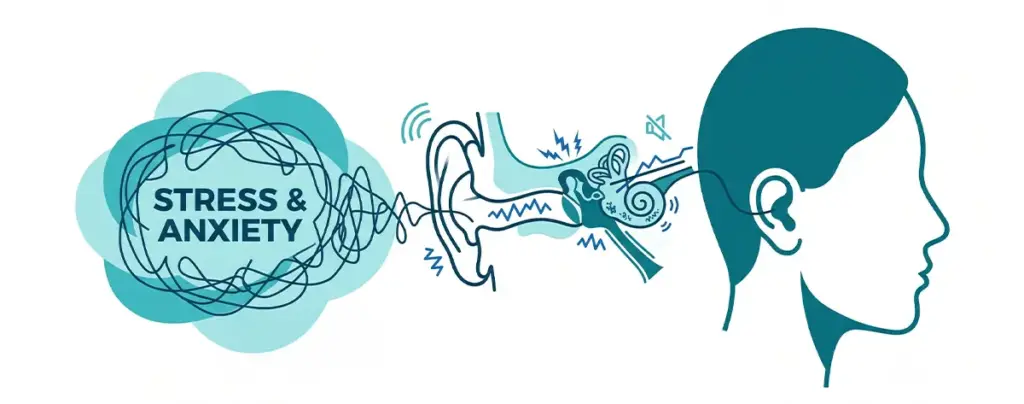
The link runs in both directions, which is what makes it stubborn. Stress sparks or worsens the ringing, and the ringing then feeds more stress.
Clinicians describe this as a vicious cycle: ringing causes anxiety, anxiety heightens awareness of the ringing, and that awareness makes the sound feel louder still. The more attention the brain gives the tinnitus, the more prominent it becomes.
This is also why tinnitus often feels worse at night. In a quiet room with nothing to focus on, the brain reaches for the nearest sound, and that sound is the ringing. Breaking the cycle means lowering the stress and giving the brain something else to attend to.
When stress meets noise at work
Stress and loud noise often share the same source: the workplace. A noisy job is frequently a high-pressure one, and the two strain your hearing together.
The noise itself causes noise-induced hearing loss, while the stress layered on top sharpens any ringing that results. Workers in factories, mining, construction and transport sit squarely in this overlap.
If your ringing started during noisy, high-pressure work, it is worth treating as more than stress alone. Hearing changes from the job can support an industrial deafness, and a hearing test creates the record you would need.
Can stress cause hearing loss?
It can contribute. Stress is not a typical primary cause of hearing loss, but chronic stress can play a part through reduced blood flow.
When stress constricts blood vessels, the inner ear depends on a steady supply and can be left short of oxygen. Over time, this reduced circulation may contribute to temporary or, in some cases, lasting hearing changes.
Stress is also a known trigger for Meniere’s disease flare-ups. The Better Health Channel notes that stress can influence how often and how severely attacks happen, and these attacks bring hearing loss, vertigo and tinnitus together. Managing stress is part of protecting your hearing, not a guarantee.
Does stress-related tinnitus go away?
Often, yes. When stress is the main driver and there is no underlying hearing loss, the ringing tends to ease as stress levels fall.
Some people only notice the ringing during stressful periods and have quiet ears the rest of the time. For them, the tinnitus is a signal rather than a fixture.
Where it does not settle, that is a reason to have your hearing checked. The stress may be sitting on top of a hearing change that needs its own attention.
How to calm stress-induced ringing
Lowering the stress and reducing the attention paid to the sound is the core of management. Over time, the aim is habituation: training your brain to filter the ringing out, so it no longer affects your day. These steps reinforce each other.
- Relaxation techniques: deep breathing, meditation and yoga help switch off the stress response.
- Sound therapy: low-level background or white noise gives the brain something else to focus on, especially at night.
- Limit caffeine and alcohol: both can heighten anxiety and make ringing more noticeable.
- Protect your sleep: better sleep builds resilience and lowers how intrusive the tinnitus feels.
- Seek support: talking to a counsellor or therapist helps manage the stress driving the cycle.
When to get your hearing checked
Some patterns deserve a professional look rather than self-management alone.
Book a hearing assessment if the ringing lasts beyond a few weeks, affects one ear only, or arrives with hearing loss or dizziness. Ringing that pulses in time with your heartbeat should be reviewed by a doctor, as it can occasionally signal a circulatory issue.
An assessment separates stress-driven ringing from an underlying hearing change, so you treat the right thing. Knowing when to seek help for your tinnitus keeps you from leaving it too long.
Frequently asked questions
Can anxiety on its own cause ringing in the ears?
Yes. Anxiety and stress share the same physical response, so anxiety can trigger tinnitus or make it more noticeable, often without any hearing damage involved. The relationship runs both ways, since persistent ringing also feeds anxiety. Managing the anxiety, sometimes with professional support, usually reduces how loud and intrusive the ringing feels.
Can a panic attack make tinnitus suddenly louder?
It can. A panic attack triggers a sharp surge of adrenaline and heightened body awareness, which can briefly make existing tinnitus spike in volume. The spike usually settles as the panic subsides and your nervous system calms. If sudden loud ringing keeps recurring or comes with hearing loss, have it assessed rather than assuming it is only stress.
Can magnesium or supplements help stress-related tinnitus?
Evidence is limited and mixed. Some people report relief from reducing stress through lifestyle changes, including magnesium-rich foods, but supplements are not a proven cure for tinnitus. Treat them as a possible support to stress management, not a replacement for a hearing assessment. Speak to a pharmacist or GP before starting any new supplement.
Will reducing stress reverse hearing loss I already have?
No. Managing stress can ease stress-related tinnitus and protect your hearing going forward, but it will not restore hearing that is already lost. Permanent hearing loss needs its own management, which may include hearing aids. A hearing assessment shows what is recoverable and what needs ongoing support.
Take the next step
If stress is setting off ringing in your ears, two things help most: lowering the stress and finding out whether anything else is going on with your hearing. Book a free hearing assessment with a Freedom Hearing audiologist to separate stress-driven ringing from an underlying hearing change, or call 1300 689 085.